

Do LED Masks Work?
Posted by Nikki Wisher on Feb 24th 2026

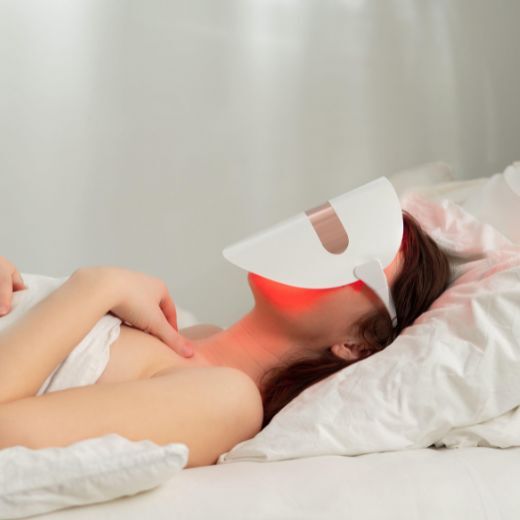
If your social media algorithms have noticed any interest you might have in skin care, self care, anti-aging, beauty, or anything in those arenas, you’ve probably seen plenty about LED masks. They’re those solid masks you can put onto your face with bright lights beaming from inside them, exposing your skin to LED light therapy. Frankly, they look pretty creepy from the outside, but they tout powerful anti-aging benefits for your skin.
The question is, do the actually work? Or is this just another product that’s being marketed heavily but doesn’t really live up to the hype? I’ve done the research to find out what the pros say.
What Does LED Therapy Do for Your Skin?
LED light therapy is all about intentionally exposing your skin to specific wavelengths of light that have been found to spark certain biochemical reactions in your skin.
Stimulate certain biochemical actions in the skin. LED therapy has been used in medical spas and dermatologists’ offices for a long time, while at-home versions have started to become more available in the past few years.
The biochemical process that LED therapy triggers depends on the type of LED light that’s used. You’ve probably most often seen LED masks using red light, which stimulates your body to produce new collagen, the natural protein that firms your skin and makes it look and feel younger. It can reduce inflammation in your skin too.
Less commonly, you might see LED masks in a few other colors too. Blue LED therapy can fight bacteria that contribute to acne, so it could help to keep blemishes away. There’s also yellow light which can reduce redness and green light which may ease pigmentation, like dark spots on your skin from sun damage.
Do Home LED Masks Really Work?
LED light therapy does work in theory, and studies have shown noticeable results with in-office therapy. But when it comes to at-home LED masks, the answer is a bit more complicated. The results so far vary from person to person, and because these devices are still relatively new, we don’t have data on long-term results.
In an office, LED therapy is heavily controlled – the devices are high-quality and are made by medical equipment manufacturers to have very specific wavelengths of light and intensity levels, with settings that are customizable by a skilled provider, and they’re also actively maintained by the med spa or medical office. When it comes to at-home devices, there are just far more unknowns. The masks vary in quality level so some of them may be executing the LED therapy well while others may not. The technology also isn’t as precise and measured as it is for in-office LED therapy. It’s typically not as customizable, and you don’t have the expertise of a provider who can customize it for you.
All of that to say, the theory behind LED masks is sound but it’s still up in the air whether they execute on that theory well. Your results will vary based on the quality of your mask but also your specific skin and body’s reaction, how consistent you are with use, and other factors. Many people do see noticeable success, but keep in mind that results do tend to be mild, so don’t expect to take 20 years off your face.
How to Maximize Your LED Mask Results
If you want to give LED masks a go, the way you go about it will make a big difference. Follow these tips for the best safety and results.
Follow Precautions for Your Eyes
As you might imagine, having all of that light so close to your face is also a lot of light exposure for your eyes. Whether or not your eyes normally feel sensitive to light, make sure that you use eye protection while you’re using the mask. Some masks come with eye protection built in, or you can use tanning goggles. And no, closing your eyes doesn’t do the same thing, sorry.
Get a Professional Recommendation
Ask your dermatologist or aesthetician if they think an LED mask would be helpful for your skin, because you may or may not be a good candidate for it based on your skin’s needs. If they do recommend it for you, ask if there’s a particular type or brand they would recommend for you.
Check for FDA Clearance
Speaking of choosing an LED mask that’s right for you, make sure you look for one that’s FDA cleared. This means you’re getting a quality mask that you can trust for safety and effectiveness.
Read and Follow the Manufacturer’s Instructions Closely
As the old wisdom tells us, too much of a good thing can quickly become a bad thing, and that’s true with LED therapy. It’s designed to work with your body’s processes in specific ways, and using it more than instructed won’t give you better results. In fact, it might put you at a higher risk for side effects. So break out those instructions when you buy your mask and follow them closely.
Pair LED Therapy with Targeted Skin Care
LED masks aren’t a substitute for consistent and strategic skin care – they’re merely an addition that can be helpful. Put together a skin care plan that aligns with your goals with the LED mask, whether that’s anti-aging, acne management or whatever your focus may be. Don’t forget the basics too: you always need a good cleanser, moisturizer, and sunscreen at a minimum.
With light therapy alongside quality skin care products, the combo can create beautiful results…as long as you don’t mind looking a bit like a robot during your skin care routine.